
What Australia Can Learn from China’s Clean Energy Manufacturing Scale

There is a point in almost every major industry transition where the conversation changes

For renewable energy, we have spent much of the past decade talking about whether solar works, whether batteries are commercially viable, how quickly technology costs will fall and how renewable generation can be integrated into existing electricity networks.

Those questions have not disappeared. But after spending time recently in China, attending Sungrow’s Global Renewable Energy Summit and visiting some of the manufacturing and technology facilities behind the global energy transition, one thing became increasingly clear.
The conversation has moved on. The next phase is not simply about producing more solar panels, building larger batteries or installing more renewable generation. It is about connecting generation, storage, consumption, data and software into increasingly intelligent energy systems.

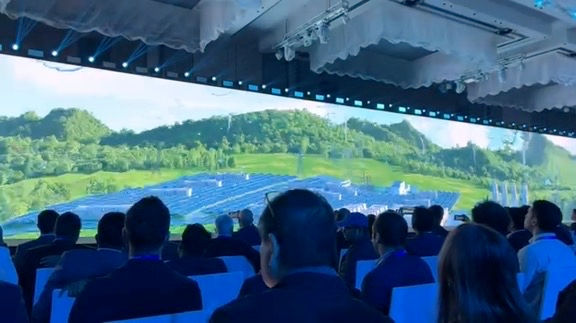
And the scale at which this is already happening is difficult to appreciate until you see it firsthand. Australia has become one of the world’s strongest adopters of rooftop solar. We have an enormous amount of renewable energy expertise, strong engineering capability and an electricity market that is undergoing significant transformation.
But Australia is primarily a consumer of much of the technology underpinning that transition.
China is manufacturing it......
Walking through large-scale renewable energy manufacturing facilities provides a very different perspective on where the industry is heading. Production lines stretch far beyond what most of us encounter in Australia. Automation, testing, quality control, logistics and research and development operate at a scale that is difficult to communicate through brochures, product specifications or industry presentations. The immediate impression is size. The more important impression is speed. Product development cycles are accelerating. Battery technology is improving. Inverter technology is becoming more intelligent. Energy management platforms are becoming more sophisticated. Manufacturing capacity is increasing while systems that were once considered highly specialised are becoming increasingly standardised.
For Australian businesses, that matters. Technology that may have appeared expensive, emerging or complex only a few years ago is becoming increasingly accessible.
The commercial question is therefore changing from:
Should we invest in renewable energy?
to:
How do we design an energy system that creates the greatest value for our organisation?
Another theme becoming more important is resilience.
For many organisations, electricity has historically been viewed primarily as an operating expense.
Increasingly, energy infrastructure is becoming a business asset.
Solar can reduce exposure to grid electricity prices. Battery storage can provide additional flexibility.
Microgrids can allow critical infrastructure to continue operating during network interruptions.
Backup capacity can protect essential equipment and business operations.
For organisations operating in regional locations, areas with constrained electricity networks or sites where continuity of supply is particularly important, resilience can become just as valuable as the energy savings themselves.
This is something we expect to see far more Australian organisations considering over the coming years.
The investment case for renewable energy will therefore become broader than simply calculating a return based on electricity savings.
Businesses will increasingly consider resilience, operational continuity, peak demand management, carbon reduction, energy security and future electricity-market participation as part of the same investment decision.

What Australia can take from what is happening in China
Australia does not need to replicate China’s manufacturing industry to benefit from what is happening there.
Our opportunity is different. Australia has extraordinary renewable energy resources.
We have strong solar conditions, rapidly growing battery adoption, sophisticated electricity markets and businesses increasingly looking for ways to reduce both energy costs and emissions.
The opportunity is to take rapidly evolving global technology and apply it intelligently to Australian conditions.
That does not necessarily mean installing the largest solar system possible.
It does not necessarily mean installing batteries simply because batteries are becoming more affordable.
And it certainly does not mean adopting technology for technology’s sake.
The best energy solution begins with understanding the organisation itself.
How does the business consume electricity?
When does peak demand occur?
How much solar generation can realistically be consumed onsite?
What electricity tariff is the business paying?
Are there network constraints?
Would battery storage provide genuine commercial value?
How important is energy resilience?
Are expansion plans likely to increase future electricity demand?
Are there opportunities to electrify vehicles, heating systems or other equipment?
Once those questions are understood, technology becomes an enabler rather than the starting point.
The next generation of commercial energy projects
Over the next several years, we expect the commercial renewable energy market to become considerably more sophisticated.
Standalone solar installations will continue to make sense for many businesses.
But increasingly we will also see combinations of solar, battery storage, energy management systems, electric vehicle charging and intelligent load control.
For larger energy users, systems may also begin interacting more actively with electricity markets.
Virtual power plants and demand-response programs may allow distributed energy assets to provide value beyond the physical site where they are installed.

Buildings may become active participants in the electricity system rather than passive consumers of energy.
Multiple sites may eventually be managed together through centralised energy platforms.
And as data centres, artificial intelligence, electrification and digital infrastructure increase electricity demand globally, the importance of managing energy intelligently will continue to grow.
Why international industry engagement matters
Renewable energy is a global industry.
Many of the technologies being installed across Australia today are being developed, manufactured and refined thousands of kilometres away.
For an energy advisory business, understanding those developments matters.
It provides perspective beyond individual products and projects. It helps us understand where manufacturers are investing. It helps identify which technologies are becoming mature and which remain emerging. And importantly, it allows those global developments to be translated into practical decisions for Australian organisations.
At Nyawi, our focus has never been technology for technology’s sake.
Our role is to help organisations understand their energy consumption, identify opportunities and make informed decisions about where renewable energy, battery storage and energy management can create genuine commercial value.
Sometimes that means recommending a new solar system. Sometimes it means improving an existing one. Sometimes it means battery storage. And sometimes the best recommendation is to address electricity contracts, operational behaviour or energy efficiency before investing in additional infrastructure. The technology will continue to change rapidly. The fundamentals of good energy strategy will not. Understand the site. Understand the load. Understand the commercial objectives. Then design the energy system around them.
Because the best energy system is not necessarily the biggest, newest or most technologically advanced.
It is the one that works best for the organisation using it.
Nyawi Pty Ltd works with businesses and organisations to understand energy consumption, identify available funding and incentives, and develop practical strategies around solar, battery storage, energy procurement and energy resilience. If your organisation has previously investigated solar or battery storage and the numbers didn't quite work, it may be worth running them again. The incentive landscape has changed considerably. And in some cases, so has the business case. |
This article provides general information only. Government programs, certificate values, eligibility criteria and available funding can change. Current requirements should always be confirmed before entering into contracts or committing to expenditure.


